


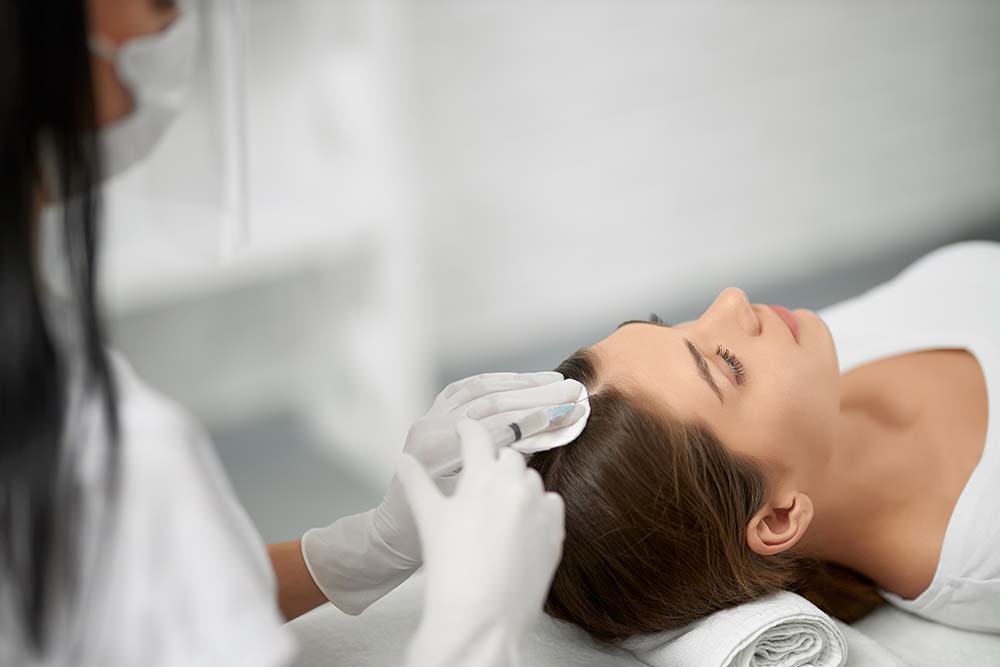
PRP Hair Treatment – How Many Sessions Needed?
Hair fall is one of those problems that sneaks up on you. One day you notice a little extra hair on your pillow, then more in the shower drain, and before you know it your parting looks wider or your hairline has started to thin. It is something lakhs of people deal with every single day, and most of them spend months trying shampoos, oils, and supplements before realising those things only go so far. If you have reached that point, you may have started hearing about PRP hair treatment and honestly, it is worth understanding properly before you decide anything.
PRP stands for Platelet-Rich Plasma. It sounds very medical and complicated but the concept is actually quite simple. Blood is taken from your own body, usually a small amount from your arm, and then it is put into a machine called a centrifuge that spins it at high speed. This spinning separates the blood into layers, and one of those layers is rich in platelets. Platelets are tiny cells in your blood that are packed with growth factors the substances your body uses to repair and regenerate tissue. This platelet-rich plasma is then injected into the areas of your scalp where hair is thinning or where the follicles have become weak.
The idea is that those growth factors wake up dormant or sluggish hair follicles, improve blood supply to the roots, and encourage the follicles to produce healthier and thicker hair again. It is not a magic fix, and it does not work the same for everyone, but for people who are in the early to moderate stages of hair loss, results can be genuinely good.
Now the question most people ask first is how many sessions do you actually need? The honest answer is that it depends on your individual situation, but here is a general idea of how it usually works.
Most doctors in Delhi follow what is called an induction phase first. During this phase, sessions are scheduled once a month for three to four consecutive months. This is where the treatment does most of its heavy lifting stimulating the follicles, improving scalp health, and beginning to slow down the hair fall. Many people notice their hair fall reducing and some new growth appearing by the end of this phase.
After the induction phase, you move into a maintenance phase. Here sessions are spaced out typically once every three to six months to keep the results going. Without maintenance sessions, the effects do gradually fade because PRP does not permanently alter your hair follicles. It gives them a boost, but that boost needs to be renewed periodically.
So in total, for the first year, most people end up doing around five to six sessions. After that, one or two sessions a year is usually enough to maintain the results. Of course this varies. Someone with more advanced hair loss or a condition like androgenetic alopecia might need more sessions. Someone who catches the problem early and responds well might need fewer.
The treatment itself is fairly straightforward. Each session takes about 45 minutes to an hour. There is no general anaesthesia involved just a topical numbing cream applied to the scalp beforehand to keep discomfort minimal. After the session, you might have a little redness or mild soreness at the injection sites, but this settles within a day or two. There is no real downtime, and most people go back to their normal routine the same day.
PRP works best for people experiencing androgenetic alopecia, which is pattern baldness, as well as those with thinning hair due to stress, nutritional deficiencies, or hormonal changes. It is less effective for people who have had complete baldness for a long time, because if the follicle is completely dead, there is nothing to stimulate. This is why early treatment always gives better results.
One thing that makes a real difference is who is doing the treatment. The technique, the quality of the PRP preparation, and the experience of the doctor all affect how well PRP works. Getting the right concentration of platelets and injecting at the correct depth and spacing matters more than people realise. This is why the clinic and doctor you choose for your treatment in Delhi should be someone who specifically understands hair loss and has handled many PRP cases.
If you are looking for reliable PRP hair treatment in Delhi from professionals who genuinely understand hair restoration, Dadu Medical Centre is a well-known clinic in Delhi with experienced doctors in Delhi who have treated a wide range of hair loss conditions. They assess your hair and scalp thoroughly before recommending a session plan that actually fits your situation rather than giving everyone the same cookie-cutter approach.
Frequently Asked Questions (8)
Q1. How many PRP sessions are needed for hair regrowth?
Ans:- Most people need 3 to 4 sessions in the first few months, followed by maintenance sessions every 3 to 6 months.
Comments (0)
Loading comments...