


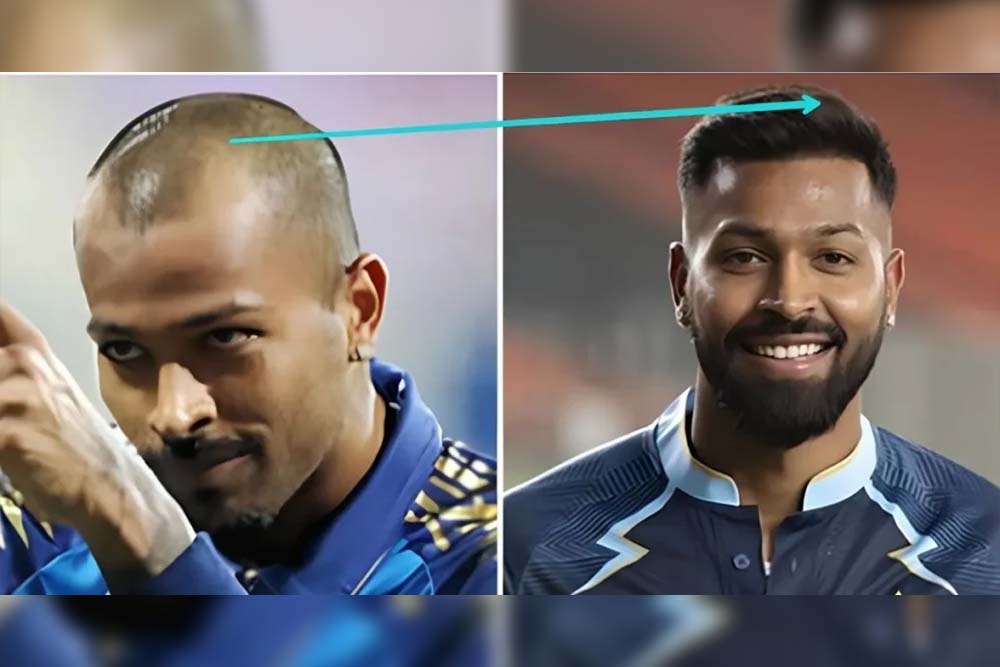
Indian Cricketers Before & After Hair Transplant — The Hairline Comeback
If you've ever watched a cricket match from the early 2000s and then pulled up a recent broadcast, you may have noticed something interesting about a few of your favourite players. Their hair looks... fuller. Thicker. More defined at the temples. And no, it's not a trick of the camera or a clever haircut. Hair transplant treatment in Delhi and across India has quietly become one of the most sought-after procedures among Indian cricketers who are constantly under HD cameras, stadium lights, and the unforgiving scrutiny of a billion fans.
Hair loss is deeply personal, and for men in the public eye, it can affect confidence in ways people don't always talk about openly. Cricket is a sport that demands mental strength, and feeling good about how you look plays a bigger role in that than most people admit. So it's no surprise that several Indian cricketers have taken matters into their own hands quite literally and invested in hair restoration.
Let's talk about who did it, what changed, and what you need to know if you're thinking about it yourself.
Why Do Cricketers Lose Hair Early?
This is actually a really valid question. Cricketers are athletes, they're fit, they eat well (mostly), and they have access to top medical care. So why do so many of them deal with hair thinning at relatively young ages?
The answer comes down to a combination of factors. First, genetics male pattern baldness runs in families and has nothing to do with how healthy you are. Second, international cricket is brutally demanding, and chronic stress is one of the leading triggers of hair fall. Third, prolonged sun exposure spending hours on the field under direct sunlight, day after day across years, can damage the scalp and accelerate hair loss. Helmets that fit tightly also cause traction over time on the hairline. Put all of this together and it's not surprising at all that cricketers are among the most common patients walking into hair transplant clinics in Delhi.
Indian Cricketers Who Had a Hair Transplant
Virender Sehwag
The Nawab of Najafgarh, one of the most explosive batsmen India has ever produced, made no secret of the fact that he went through a hair transplant. Sehwag was actually quite candid about it in interviews, which is one of the reasons he deserves credit — he helped bring the conversation out into the open. His before photos from his playing days show a clearly receding hairline, particularly at the temples. His more recent public appearances show a noticeably fuller, denser hairline. The transformation is clean, natural-looking, and clearly the result of well-executed FUE work.
Harbhajan Singh
Bhajji, as he's affectionately called, has always had a strong on-field personality. But his hair transformation over the years has been quietly dramatic. If you look at photos from the mid-2000s compared to now, the density at his crown and temples has improved significantly. He hasn't given a detailed public statement about hair transplant surgery specifically, but the change is visible enough that it's been widely discussed in cricket and entertainment circles.
Sourav Ganguly
Dada's hairline transformation has been one of the most talked-about in Indian cricket. The former captain and current BCCI president showed visible thinning during his later playing years. But photographs from the last decade show a hairline that looks considerably more youthful and defined. Ganguly has spoken broadly about maintaining his health and appearance in retirement, and many experts looking at the visual evidence point strongly toward a professionally done hair transplant likely FUE, given how seamless the result appears.
Mohammad Azharuddin
The former Indian captain and stylish middle-order batsman is another name that comes up frequently in this conversation. Azharuddin was always known for his elegant, dapper appearance. As he aged and hair thinning became more visible in earlier photographs, he made changes and those changes have clearly held. His current look, especially at public appearances and political events, shows a consistent, full hairline that hasn't changed much in years, which is a hallmark of successful hair transplant treatment.
Zaheer Khan
Zak, India's premier left-arm pacer for over a decade, has also undergone a visible transformation in terms of hair density. His earlier years on the field showed progressive thinning, while more recent appearances show noticeably improved coverage. Like many of his contemporaries, he hasn't made a formal announcement, but the before-and-after visual difference speaks for itself. Hair restoration professionals who study these cases broadly agree on what's happened here.
| Cricketer | Visible Issue (Before) | Estimated Technique | Result Today |
|---|---|---|---|
| Virender Sehwag | Receding temples, confirmed transplant | FUE | Natural, full hairline |
| Harbhajan Singh | Crown and temple thinning | FUE (alleged) | Noticeably denser appearance |
| Sourav Ganguly | Progressive thinning during later career | FUE (alleged) | Youthful, defined hairline |
| Mohammad Azharuddin | Age-related hair loss | Hair transplant (alleged) | Consistent, maintained coverage |
| Zaheer Khan | Gradual thinning on field | FUE (alleged) | Improved density overall |
Why More People Are Choosing Hair Transplant Treatment in Delhi
Delhi has established itself as one of the top cities in India for hair restoration treatment and there are very clear reasons for that. The city has a concentration of highly qualified dermatologists, trichologists, and hair transplant surgeons who train internationally and bring world-class techniques back home. The clinics here use the latest equipment, follow strict hygiene protocols, and offer a level of aftercare that smaller cities simply can't match yet.
Dr. Nivedita Dadu, one of Delhi's most respected names in dermatology and aesthetic medicine, has consistently highlighted something that many patients overlook: a hair transplant is not just a cosmetic decision it's a medical one. Before any procedure is done, a proper diagnosis is essential. Is the hair loss still progressing? What's the density of the donor area? Are there underlying hormonal or nutritional factors making things worse? These are questions that only a qualified doctor in Delhi can answer accurately, and the answers directly affect both the design of the hairline and the long-term success of the result.
At her clinic in Delhi, the approach is to treat hair loss from the root quite literally. The goal is not just to transplant follicles but to stabilise the scalp environment so the existing hair doesn't keep falling while the new hair grows in.
FUE vs FUT — Which Is the Right Choice?
| Factor | FUE (Follicular Unit Extraction) | FUT (Follicular Unit Transplantation) |
|---|---|---|
| Scarring | Tiny dot scars, barely visible | Linear scar at the back of head |
| Recovery Time | 5 to 7 days | 10 to 14 days |
| Best For | Moderate hair loss, active lifestyle | Large area, high graft requirement |
| Graft Yield | 2,000 to 4,000 per session | 3,000 to 5,000 per session |
| Pain Level | Mild | Mild to moderate |
| Popular In Delhi | Yes, most preferred technique | Less common now but still used |
Most doctors in Delhi today lean toward recommending FUE for the majority of patients because of the minimal scarring, faster recovery, and equally natural results. FUT is still useful in specific cases where a very large number of grafts are needed in a single session.
What Happens After the Transplant?
People worry about this part the most and understandably so. Here's the honest timeline. The first week involves some swelling, redness, and tiny scabs around each graft. You'll be asked to sleep with your head elevated and avoid washing your hair vigorously. Around weeks three to six, something called shock loss happens the newly transplanted hair falls out. This is completely normal and not a sign that anything went wrong. The follicle is still alive underneath the scalp and will start producing new hair around the three to four month mark. By month twelve, you're looking at the full, final result.
The cricketers you see with great hair today went through exactly this process quietly, between seasons or during recovery periods, and then showed up on the other side looking like themselves again, just with better hair.
What the Treatment Costs in Delhi
This is one of the most common questions people ask when they're considering the procedure. The cost of a hair transplant in Delhi depends on three main things: the technique used (FUE or FUT), the number of grafts needed, and the clinic you choose. A rough ballpark is between ₹40,000 and ₹1,50,000 depending on the extent of the work. More grafts mean more time, more precision, and a higher cost. At top clinics in Delhi, you're also paying for the expertise, aftercare, and follow-up consultations all of which matter a lot for long-term results.
Choosing the cheapest option almost always leads to regret. The best clinics in Delhi are transparent about pricing and give you a detailed breakdown during consultation so there are no surprises.
Comments (0)
Loading comments...