


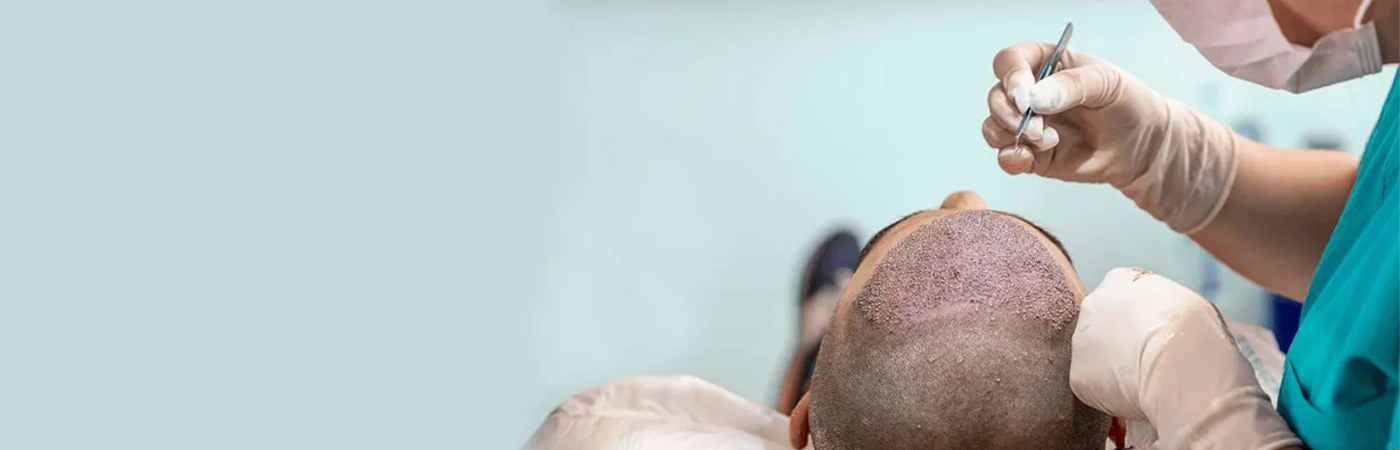
Best Hair Transplant
DMC Trichology is known for providing the best hair transplant in Delhi, performed by expert surgeons. Our clinical hair transplant treatments are 100% safe and result-oriented. At DMC Trichology, we offer world-class hair transplant results at the most affordable prices. This is possible because of the advanced techniques that we use at our clinic.
Hair loss or alopecia can affect the scalp or any part of the body and can be temporary or permanent. The loss of hair can result from genetics, hormonal changes, medical conditions or a normal part of ageing. An individual has approximately 1,00,000-1,50,000 hair on their head. Losing anywhere from 50 to 100 strands of hair per day is normal. However, excessive hair loss can be alarming. To manage it one can go for hair transplantation, an amazing technique of hair restoration.
DMC Trichology specialises in hair restoration surgeries, employing a team of renowned hair transplant surgeons, who utilize modern equipment and innovative techniques to deliver positive outcomes for patients.
What is a Hair Transplant?
A hair transplant is a minimally invasive surgical procedure in which hair follicles are extracted from a donor site (Generally the back or sides of the head) and transplanted to the balding or thinning areas. In other words, we can say that hair is taken from one part of the scalp area and implanted into another part where there is almost no hair. Hair transplants are generally performed by hair transplant surgeons. The procedure can take 4–8 hours; most people can return to work within 2–5 days. Hair transplants can give permanent, natural-looking results. However, the transplanted hair will fall out within 2–3 weeks, and new growth won't be noticeable for a few months.
BENEFITS OF HAIR TRANSPLANT IN DELHI
- It is a great way to gain confidence and self-esteem back.
- Natural process and does not use any chemical products or cover-up products.
- Cost-effective option compared to processes like weaves, wigs, and spray-ons that need constant maintenance regularly.
- Eliminates baldness.
- Give more options for hair styling.
- High rate of success for hair restoration.
- Requires less maintenance compared to other time-consuming procedures.
- No more bald spots as it covers up all the spots effortlessly
- Natural-looking results
- Low maintenance
IDEAL CANDIDATES FOR HAIR TRANSPLANT
Hair transplant is a suitable option for adults, both men and women, who:
- Are distressed with their looks affected by different kinds of alopecia (except alopecia areata) or having thinning hair, receding hairline, or bald spots/patches.
- People experiencing baldness in patches, widening hair partition, and hair thinning and less volume are candidates for this procedure.
- Are having enough healthy hair growth at the back or sides of their head to serve as donor areas.
- Are unable to restore their natural hair growth with non-surgical alternatives like meso grow, RRT, HGP, mesotherapy, and others.
- Are having healthy scalp with good skin laxity and no active infections, injuries, or skin conditions.
- Are physically and mentally healthy without any illnesses or conditions that could interfere with the surgery outcome.
- They have realistic expectations of their surgery results and a positive outlook toward their treatment.
- Women with thinning hair and receding hairline.
- People looking for a change in their existing hairline.
You must consult a hair transplant doctor at DMC Trichology located at Vasant Vihar (South Delhi), Rajouri Garden (West Delhi) to confirm your candidacy for a hair transplant.
WHO IS NOT A CANDIDATE FOR HAIR TRANSPLANT SURGERY?
- Those with a keloidal tendency
- Those with active infection or inflammation on the scalp.
Hair Transplant Technique
1. FUT HAIR TRANSPLANT
Follicular Unit Transplantation (FUT) is a cutting-edge technique used at our centre to provide the most effective hair transplant in Rajouri Garden, Delhi. This therapy involves extracting a linear strip of hair follicles from the donor area. Individual follicles are extracted from the strip, and the prepared grafts are implanted into the recipient area. This surgery requires stitches on the donor area and may leave a scar.
2. FUE HAIR TRANSPLANT
Follicular Unit Extraction (FUE) is an advanced and popular procedure for hair transplant in South Delhi. It involves individually harvesting follicles from the head. These grafts are then implanted into the recipient. The basic principle of FUE is to extract an intact follicular unit which would heal with minimal scarring. This is also referred to as the sutureless method of transplantation. The back and sides of the scalp are the areas which are usually resistant to patterned hair loss (where the hair remains for the longest period). Hair from these areas of the scalp retains its growth, texture, and colour characteristics even after being transplanted to the bald area.
In this technique, the trichologist extracts hair follicles from the hair-rich areas of the scalp, makes small incisions on the recipient area and then implants the grafts within these incisions using specialised tools. While doing the implantation, it is necessary to keep in mind the angle and direction of the native hair on the scalp. Depending on the degree of hair loss and availability of donor sites, one or more sessions are required in most individuals.
3. DMC Golden Touch
DMC Golden Touch is DMC Trichology's exclusive hair restoration treatment. This treatment integrates FUE extraction and advanced implantation technique- Direct Hair Implantation (DHI). This approach is becoming popular as it is a painless surgery without stitches, and provides natural and superior results with precision, no scarring, and swift recovery.
To get the best hair transplant in Delhi, visit DMC -Trichology Centres in Rajouri Garden (West Delhi) & Vasant Vihar (South Delhi).
WHAT HAPPENS DURING THE HAIR TRANSPLANT PROCEDURE?
During the surgery, the hair from the 'donor' area of the scalp is trimmed short. This makes the procedure easy to perform. Then, the head area where the hair grows is thick and anaesthetized safely.
The small hair grafts are extracted, and then transplanted into the front or bald area of the scalp.
WHAT TO EXPECT AFTER HAIR TRANSPLANT PROCEDURE?
There will be small red scabs on the recipient site. They will be visible for about 7-10 days. One can see their normal appearance after 10-15 days after surgery. There will be a slight redness that might be visible for a few days.
WHEN DO YOU SEE RESULTS FROM HAIR TRANSPLANT SURGERY?
After about 2-4 months of receiving a hair transplant, your transplanted hair will start to push through your skin, which is fine initially. The hair growth happens at different times and speeds, resulting in a patchy start. You can expect full growth of your transplanted hair in about a year.
HOW TO TAKE CARE OF SCALP AFTER HAIR TRANSPLANT?
Post-hair transplant, you must follow these aftercare steps as set by the hair transplant surgeons:
- Spray the scalp with saline for 1 to 4 days to speed healing and prevent incision infection and scabbing.
- 48 hours post-procedure, the scalp is washed with medicated shampoo.
- Take proper rest in the initial few days to speed up your recovery.
- Avoid swimming, smoking, alcohol consumption, steam rooms, sun tanning beds, hot baths, and high-impact exercise for a few days.
- Take prescribed painkillers, anti-inflammatory medications, and antibiotics to reduce pain, swelling, and chances of infection.
- Avoid the application of any hair products.
- Do not wear tight headwear like caps and helmets that can cause sweating and delay healing.
- Avoid exposing the scalp to direct sunlight.
- Do not comb hair in the initial few days.
- Gently wash the scalp after 5 to 9 days of the surgery, and normally wash hair after about 2 weeks.
Schedule check-up appointments after 3 months and 6 months after the surgery to see the progress of the results.
HOW LONG DOES THE HAIR TRANSPLANT PROCEDURE TAKE?
Hair transplant surgery lasts for a few hours. The procedure duration is decided based on the surgical technique chosen and the size of the area to be covered with donor hair. Mostly, the hair transplantation procedure is over in a single day, but two sessions may be required in case of extensive hair loss.
IS HAIR TRANSPLANT SURGERY PAINFUL?
The procedure is performed under anaesthetic, and the method does not cause any pain. The scalp will feel a little numb and tender once the anaesthesia wears off. There will be a little redness and swelling for a few days after surgery. One can take mild painkillers (as advised by the doctor) to alleviate any pain and discomfort following surgery.
You will be surprised to have a comfortable experience during a hair transplant surgery in Delhi, India, at DMC Trichology. As local anaesthesia will be injected into the donor and recipient areas, the only pain or discomfort felt by you during the operation would be the injections. After the hair transplant, there will be slight irritation, redness, or swelling, but such discomfort quickly subsides.
Why Choose DMC Trichology for Hair Transplant in Delhi?
Choose us for a hair transplant in Delhi because we offer hair transplant procedures to ensure high-quality care for patients.
- Expert Team of Surgeons
- Advanced Techniques
- State-of-the-Art Facilities
- Personalized Treatment Plans
- Best Results of Hair Transplant
- Affordable Cost
- Patient Positive Feedback
- Patient Support and Care
Comments (0)
Loading comments...